
B2B Ecommerce World · Indianapolis · November 2, 2026
AI Year One: what we tried, what failed, and what’s next.
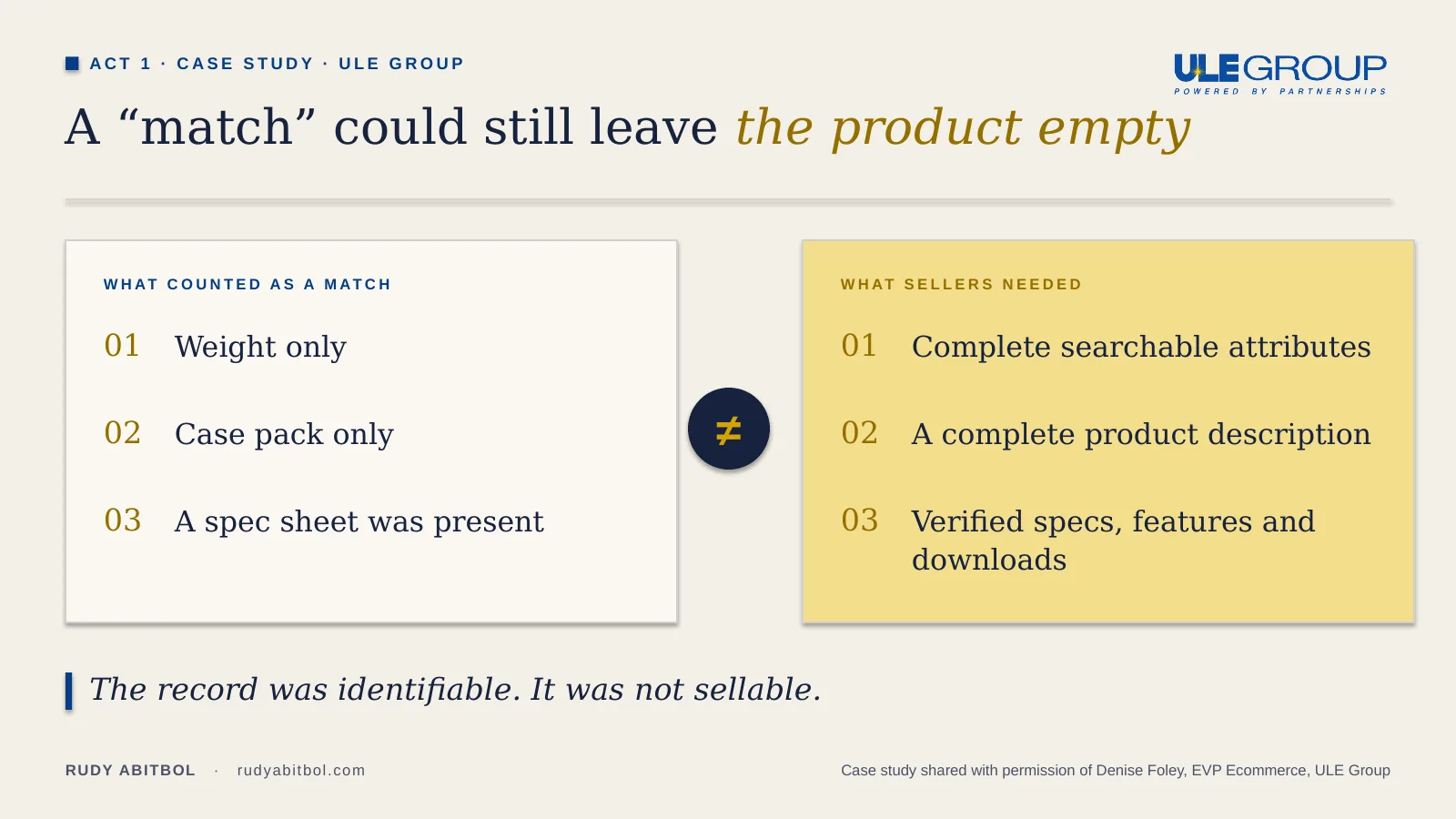
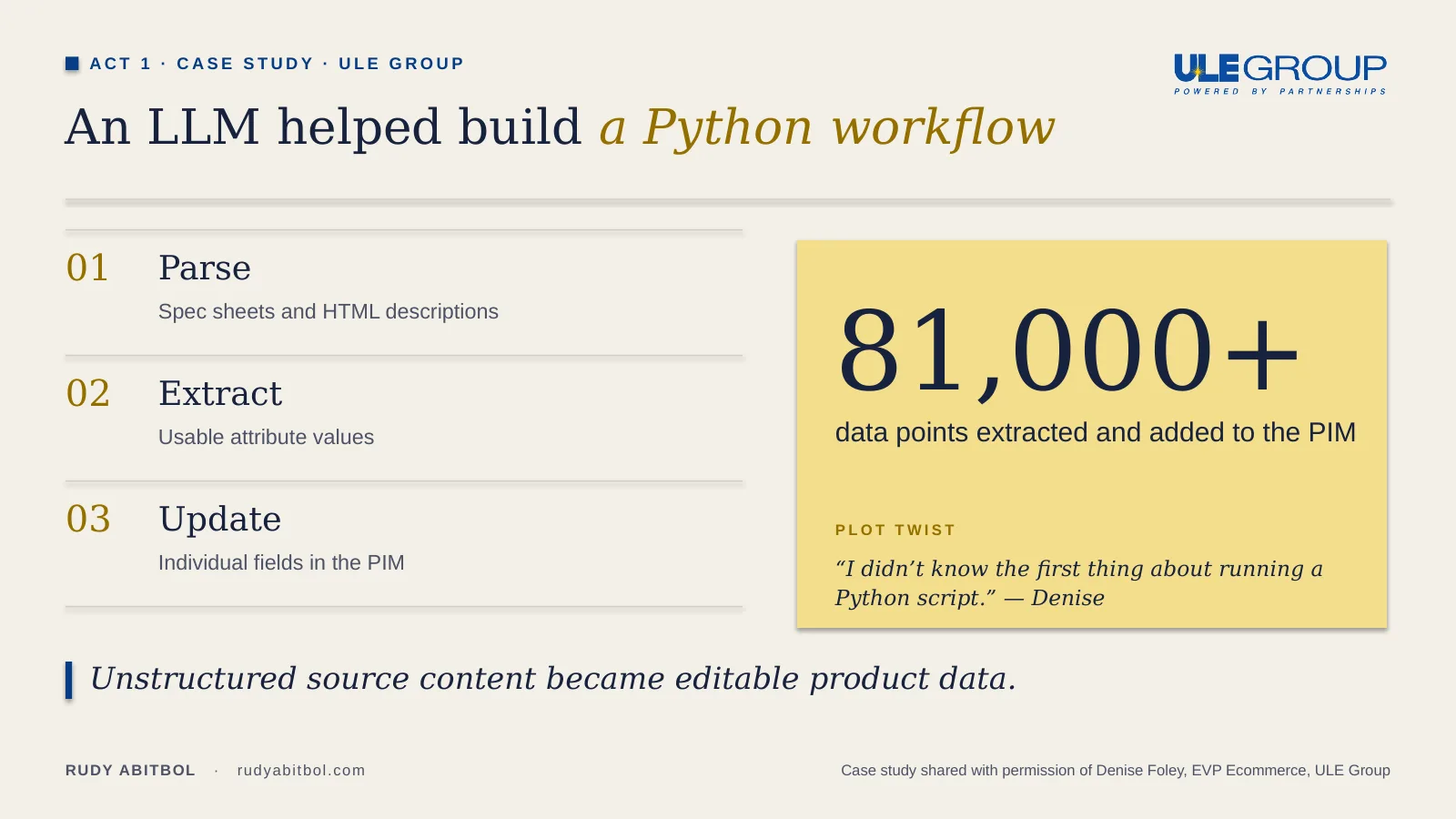
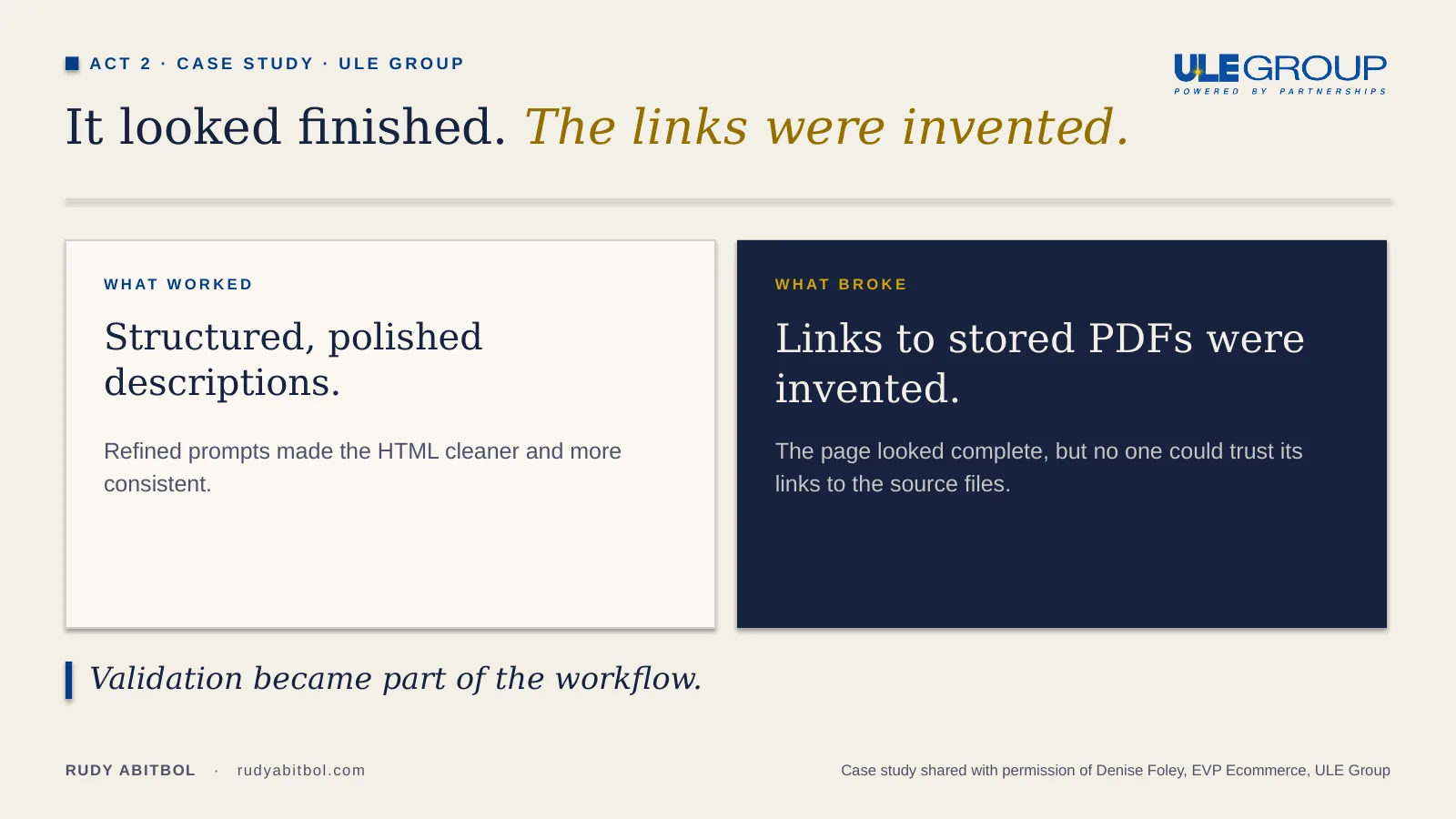
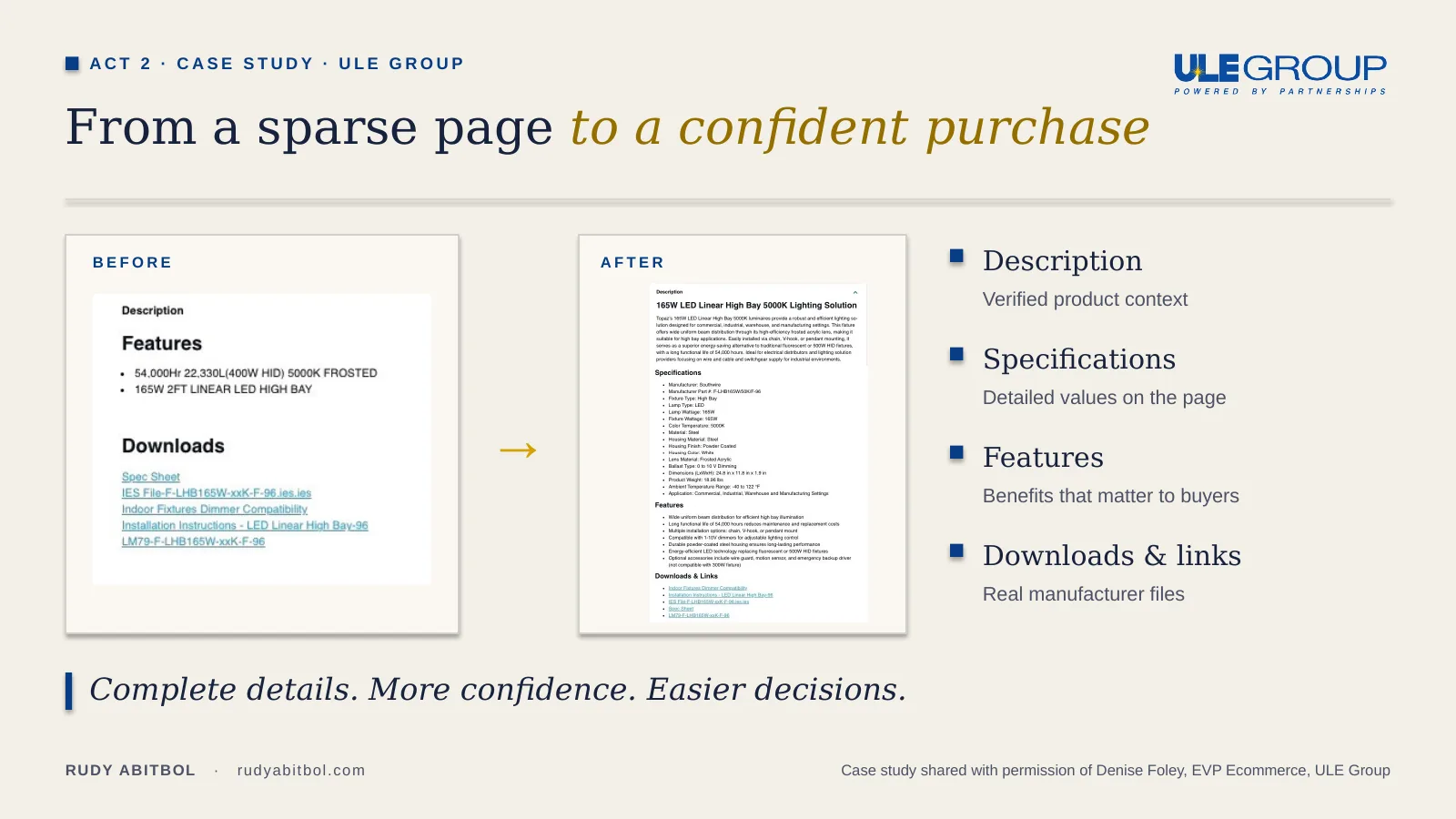
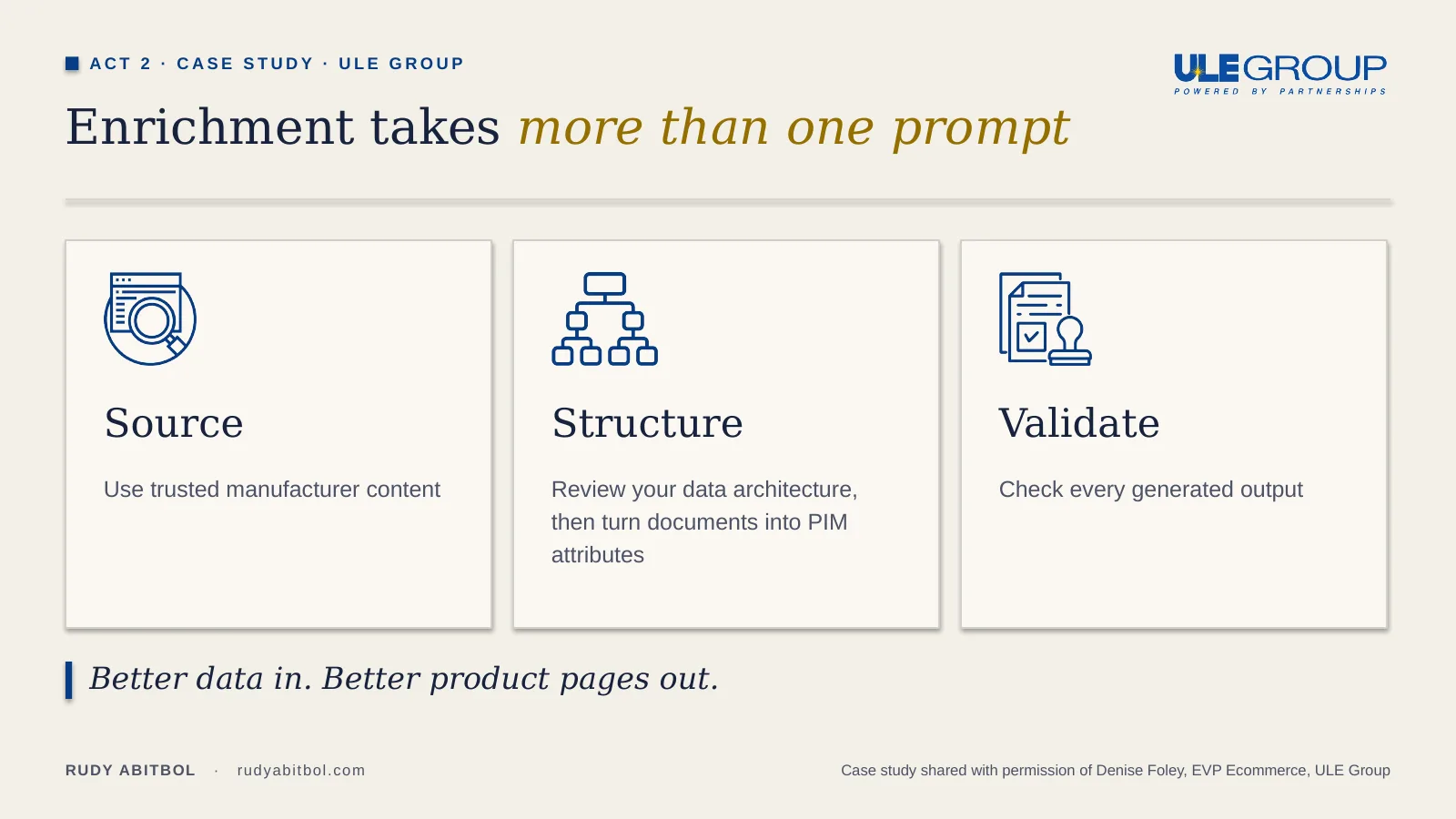
ULE Group’s first year putting AI to work on product data: 81,000+ data points added to their PIM, one invented-link scare, and the model I’d use to get your top 50 SKUs ready for buyers who shop through AI.
The 60-second version. Product data is never done.
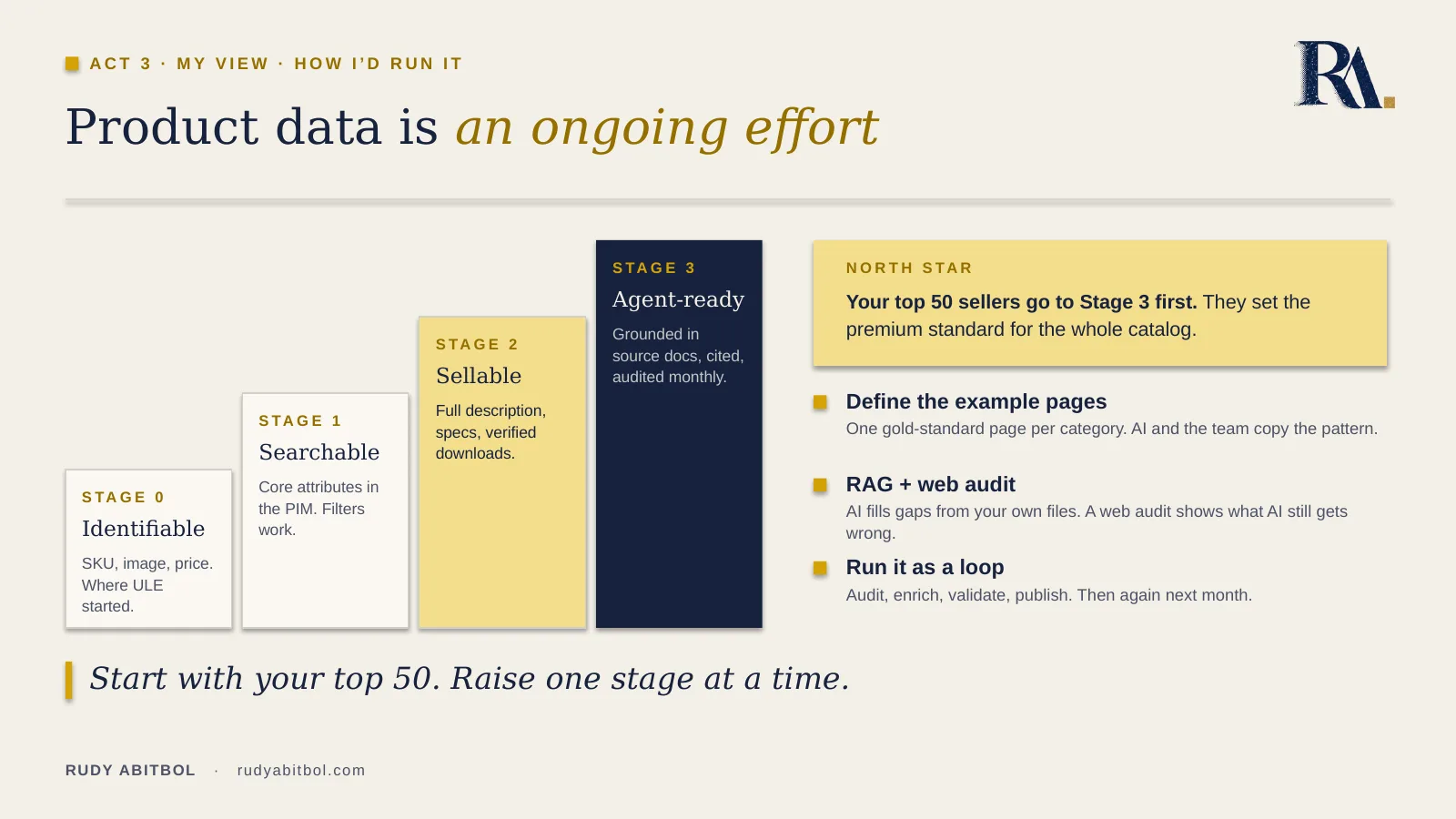
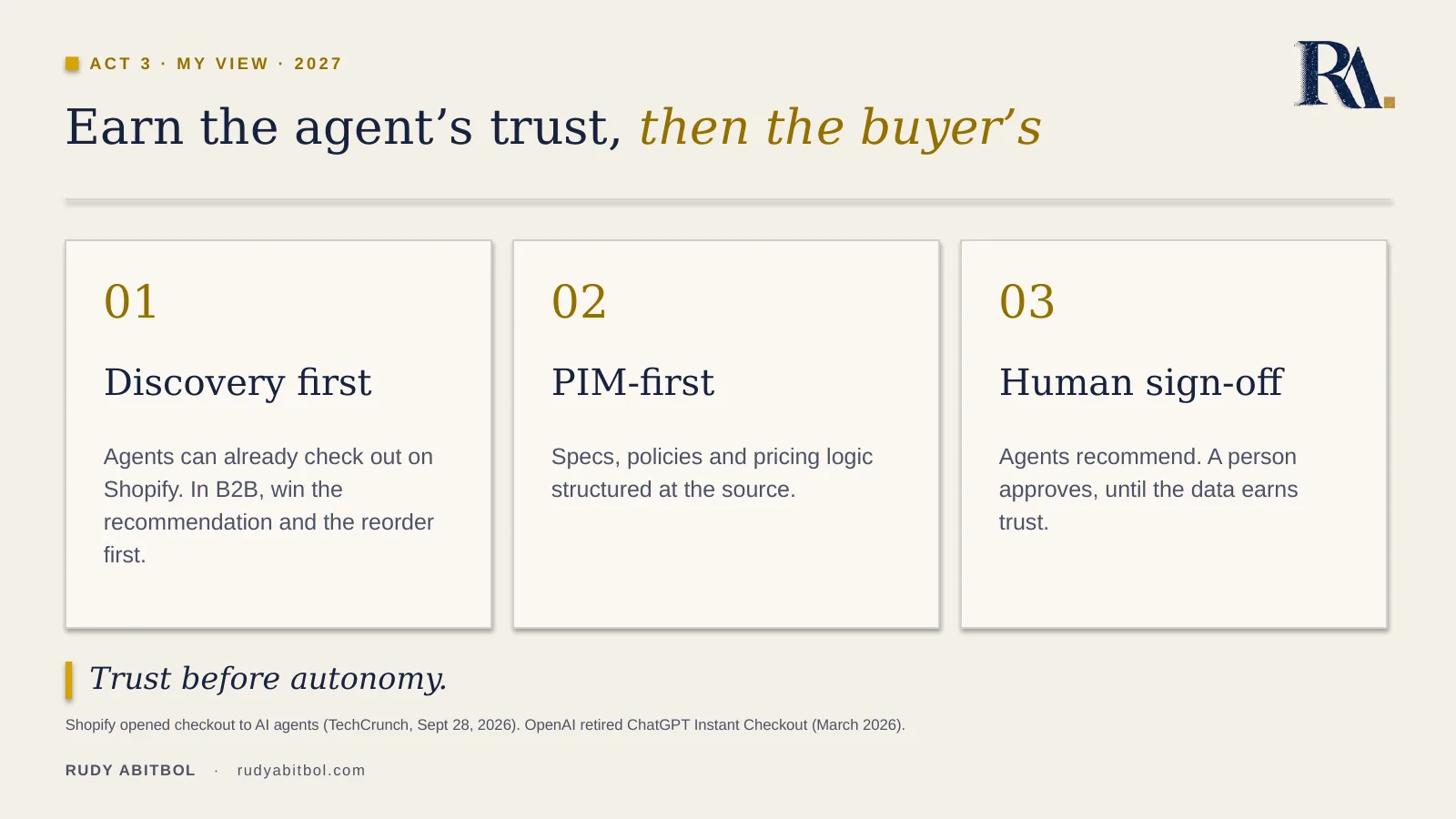
Give every product page a stage. Don’t try to lift your whole catalog at once: take your top 50 sellers to Stage 3 first and let them set the standard.
Identifiable
A SKU, an image, a price. Where ULE started.
Searchable
Core attributes in the PIM. Filters work.
Sellable
Full description, verified specs, real downloads.
Agent-ready
Grounded in source documents, cited, audited every month.
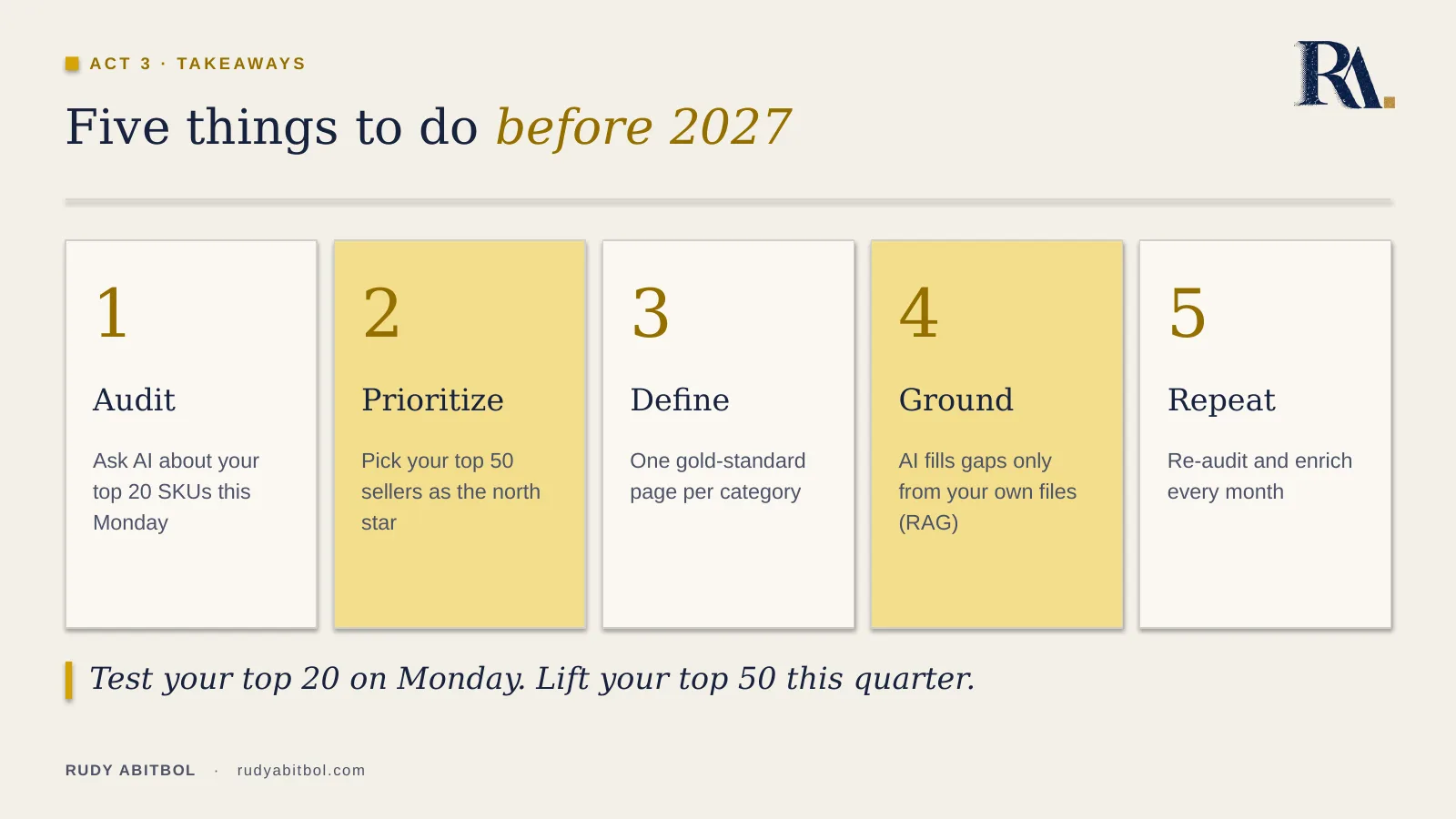
Five things to do before 2027.
Test your top 20 on Monday. Lift your top 50 this quarter.
Ask ChatGPT or Claude about your top 20 SKUs, the way a buyer would.
Pick your top 50 sellers as the north star.
One gold-standard product page per category. Show it to execs, procurement and manufacturers.
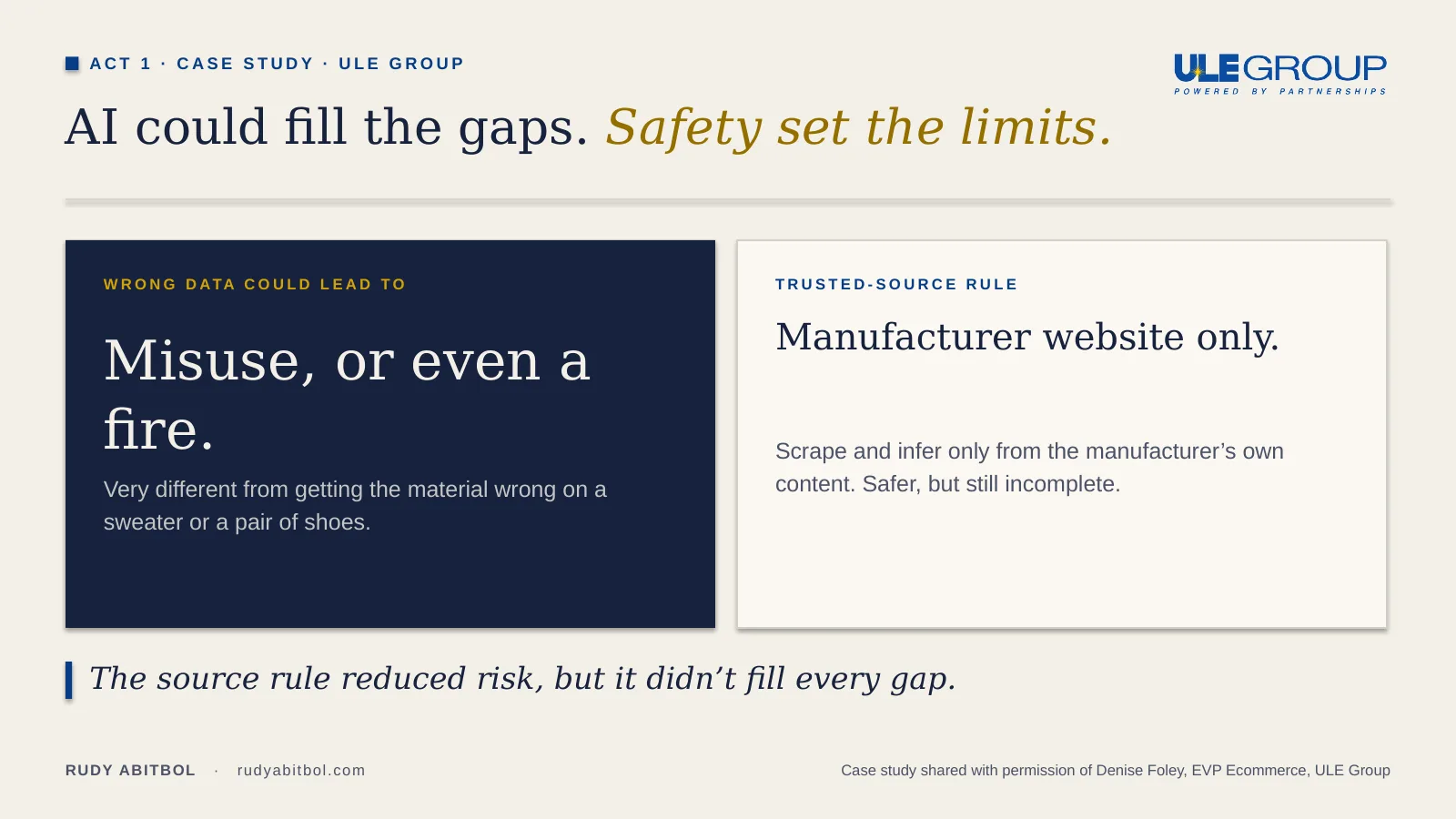
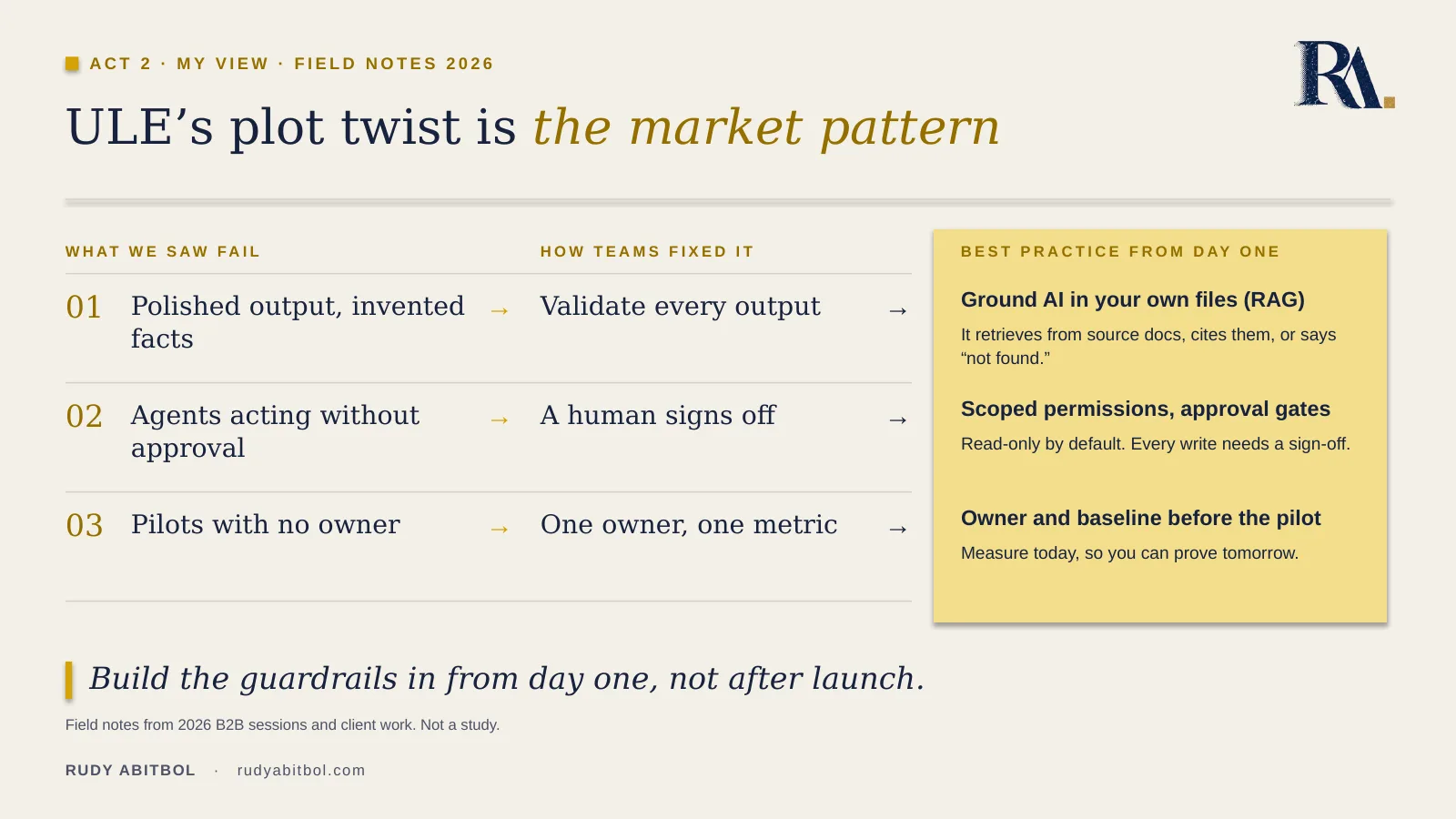
AI fills gaps only from your own files (RAG). Never let it write the links.
Re-audit and enrich every month. Measure discoverability, not just conversion.
The slides.
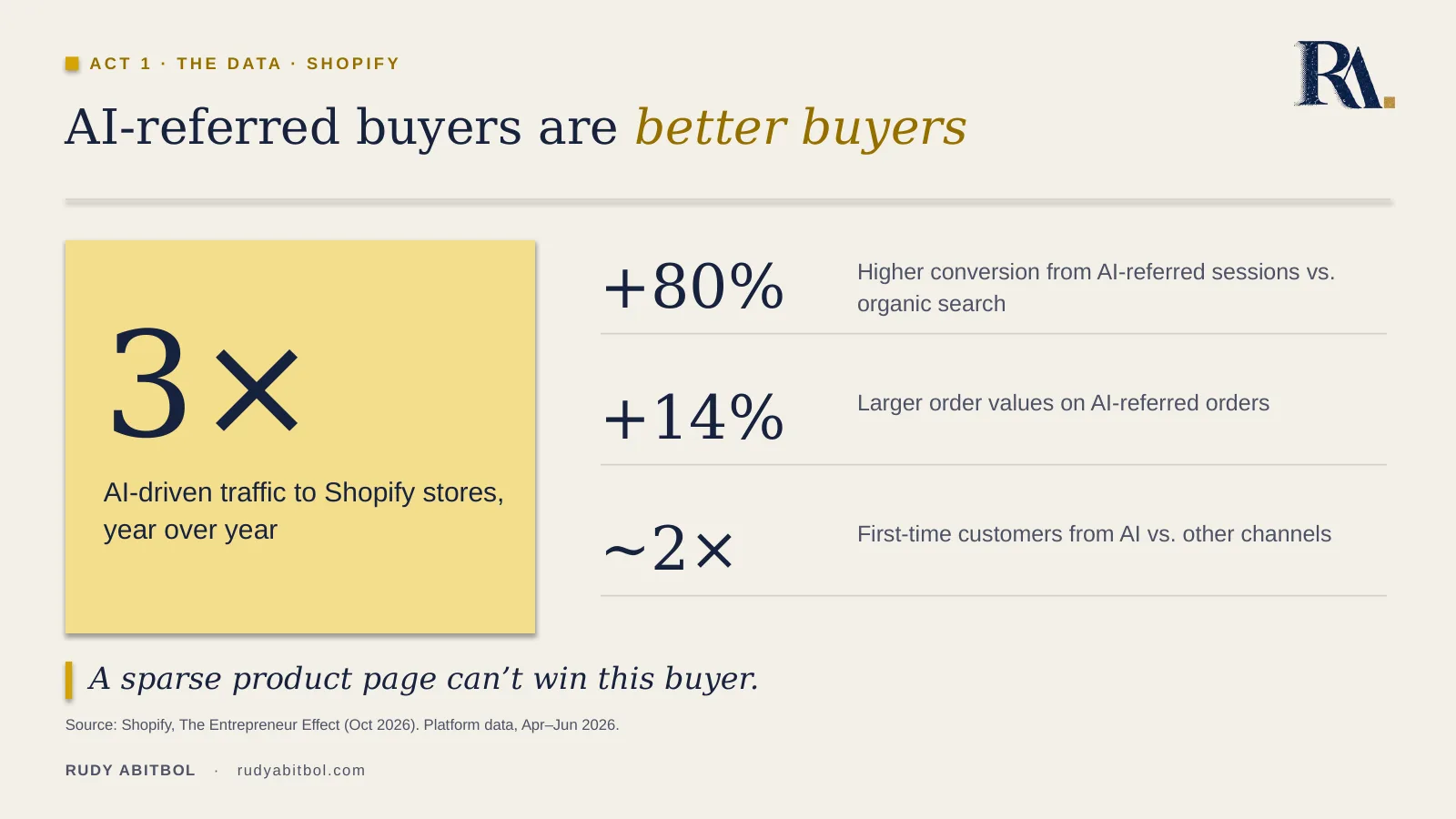
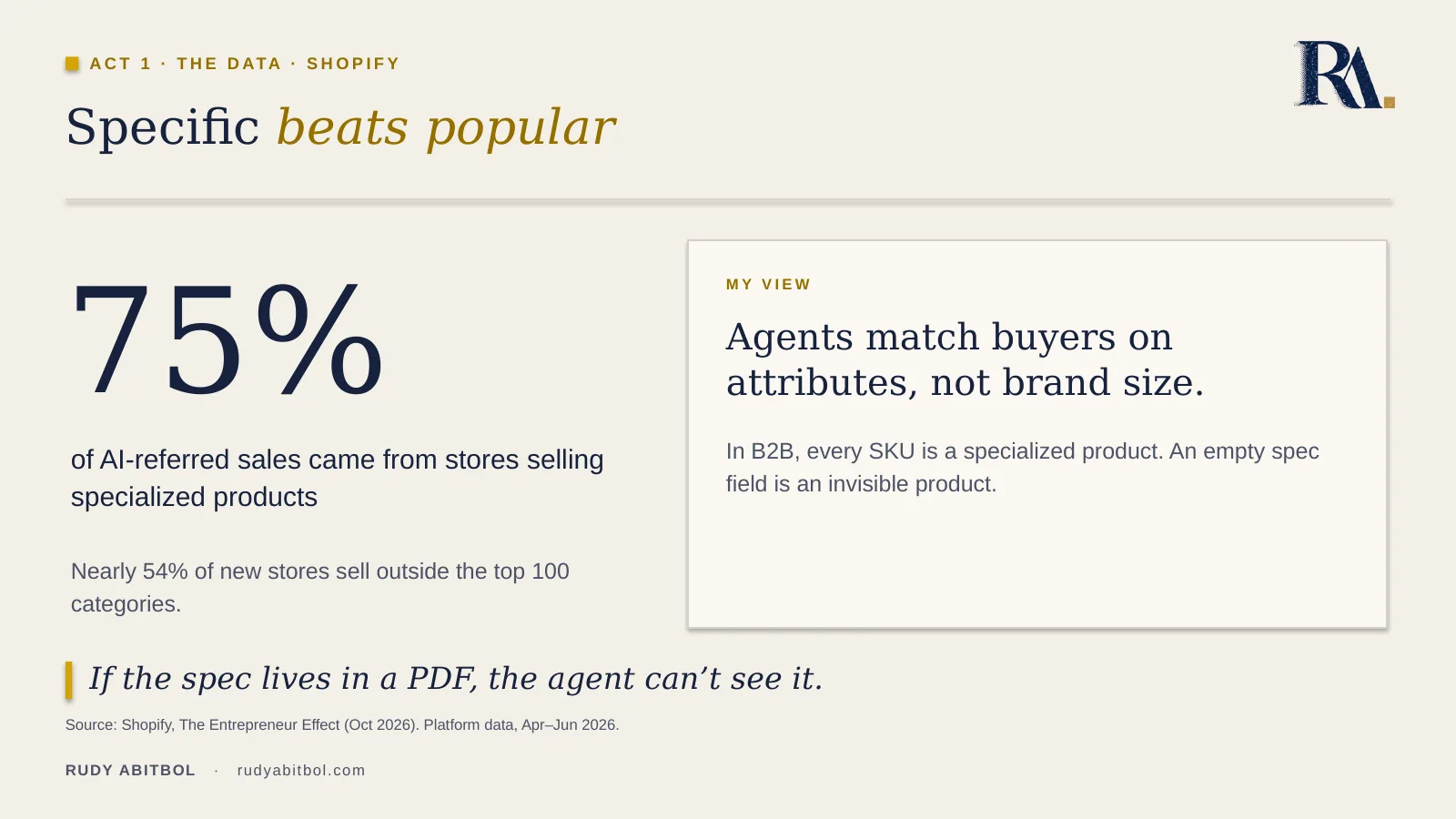
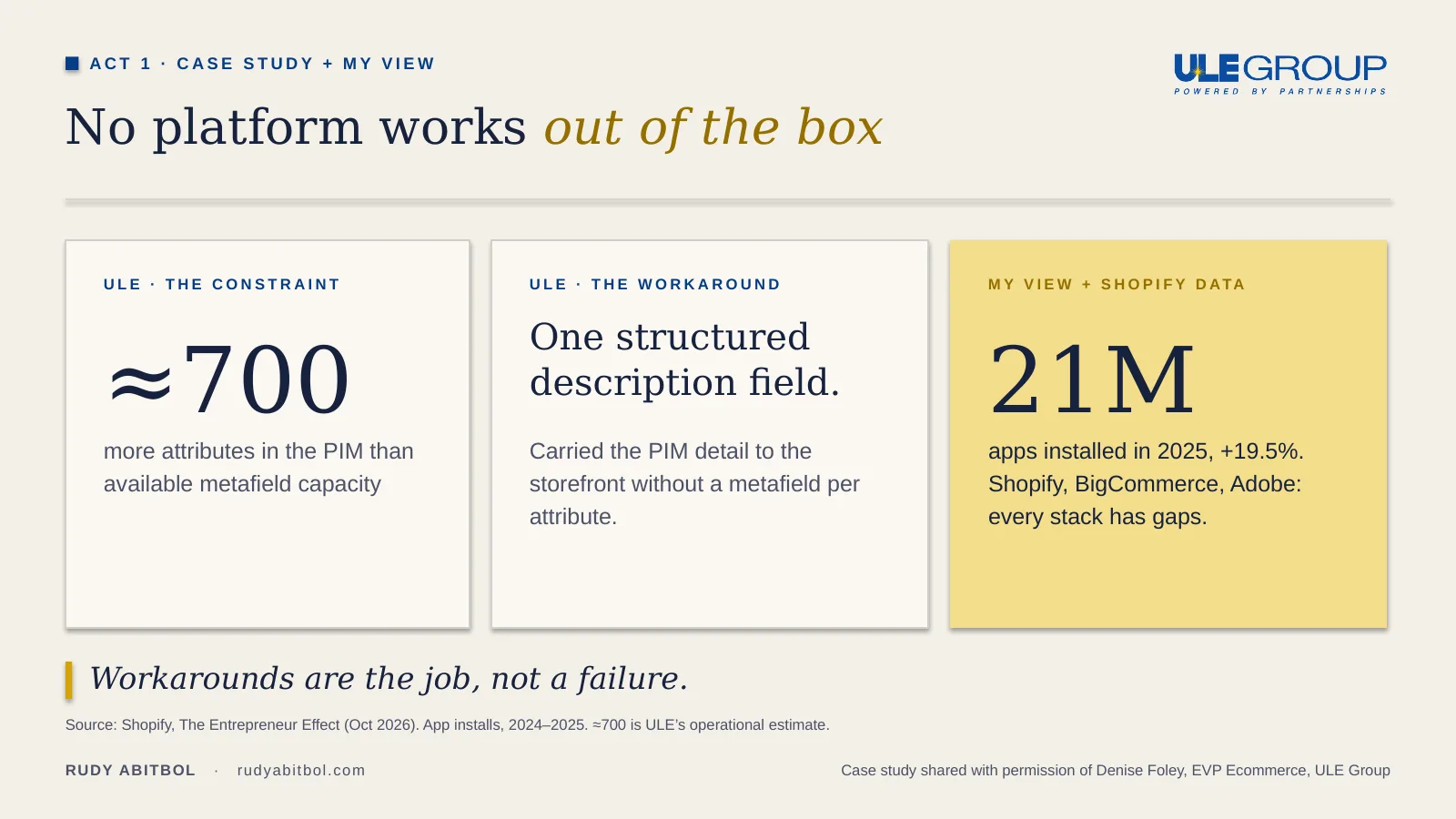
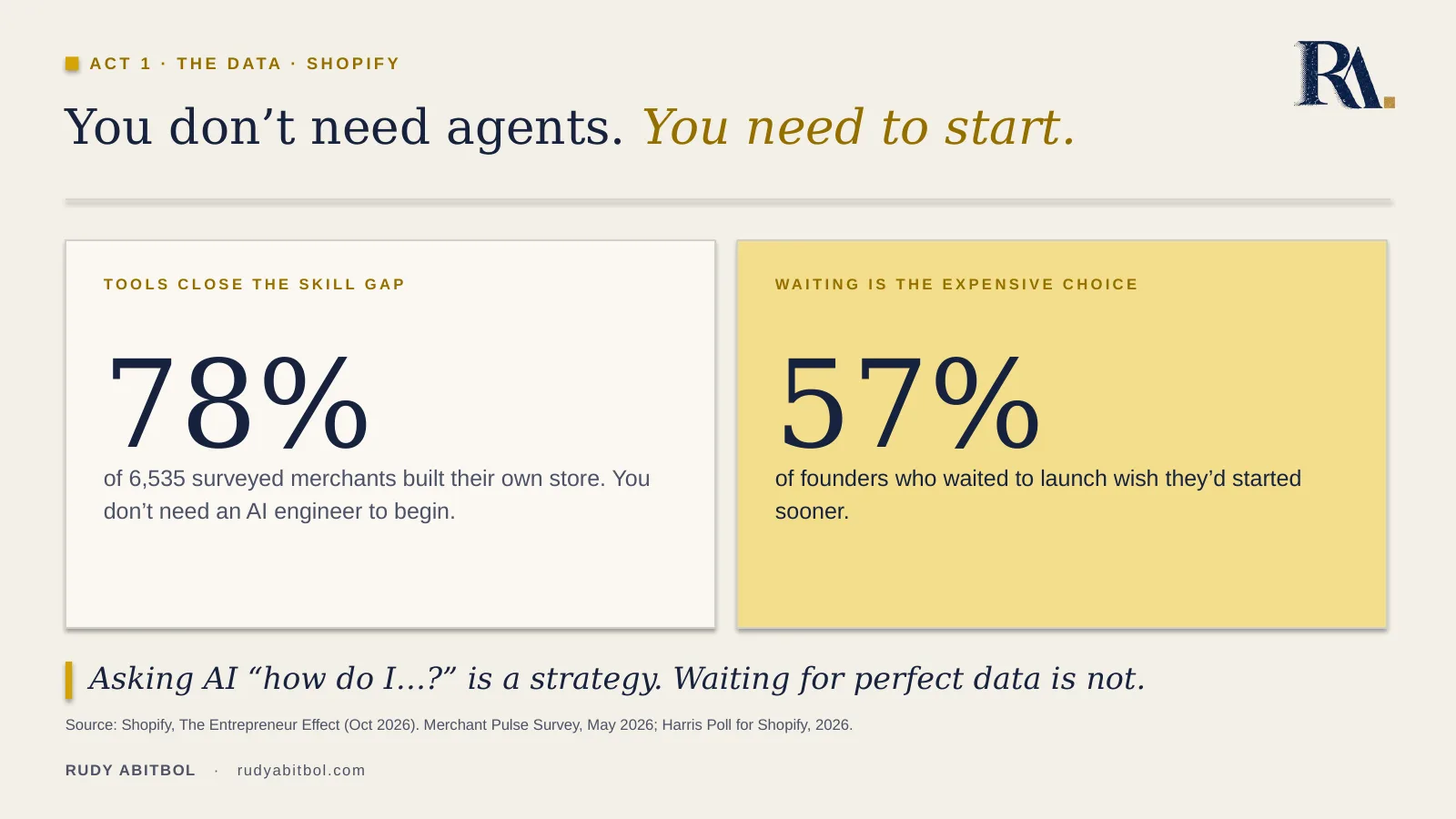
Data is sourced on each slide (mostly Shopify’s 2026 platform data). Everything labeled “my view” is my opinion.
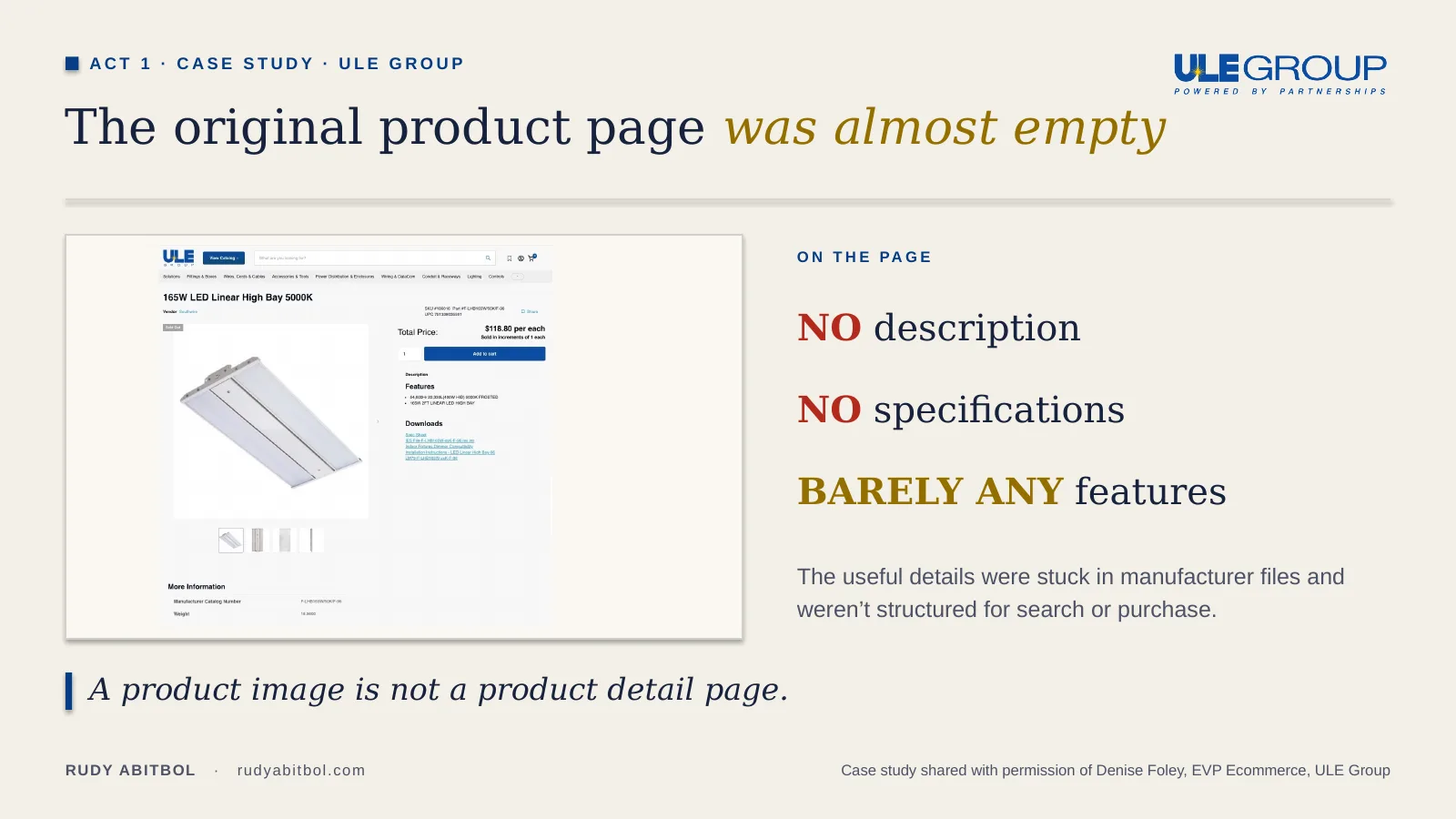

Thank you to Denise Foley, EVP Ecommerce, and the ULE Group team for letting me share their story.
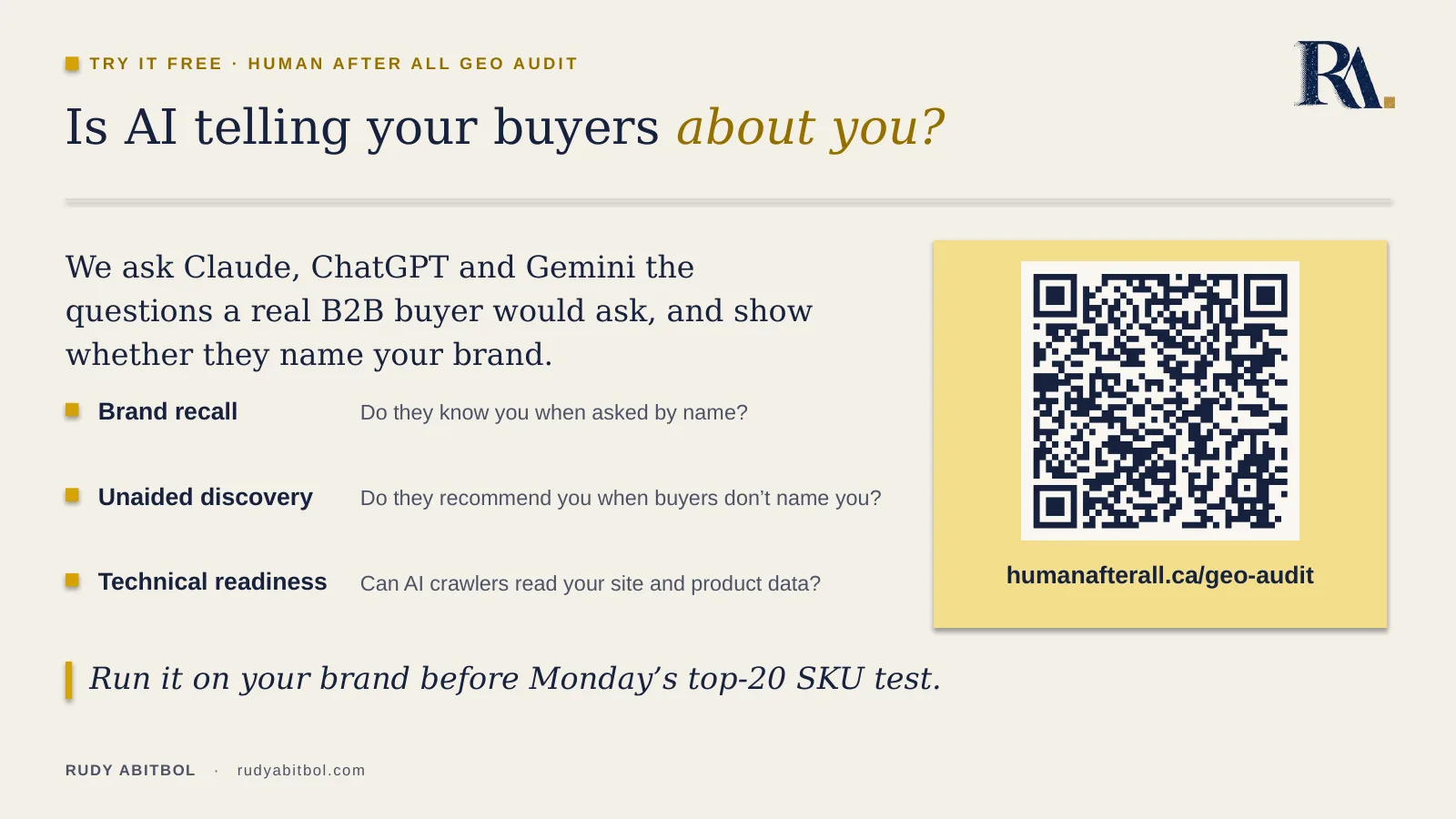
Run the Monday test in 90 seconds.
The free GEO audit asks Claude, ChatGPT and Gemini the questions your buyers ask, and shows whether they name you.
Want your top 50 at Stage 3?
This is the work I do every day: Akeneo and Shopify Plus, supplier files turned into structured product data, and product content that AI can read and buyers trust.